How Hard Is Gorilla Trekking in Uganda, Really?
How hard is gorilla trekking in Uganda? Get a practical view of terrain, mud, altitude, fitness, pacing, porter support, and route planning.
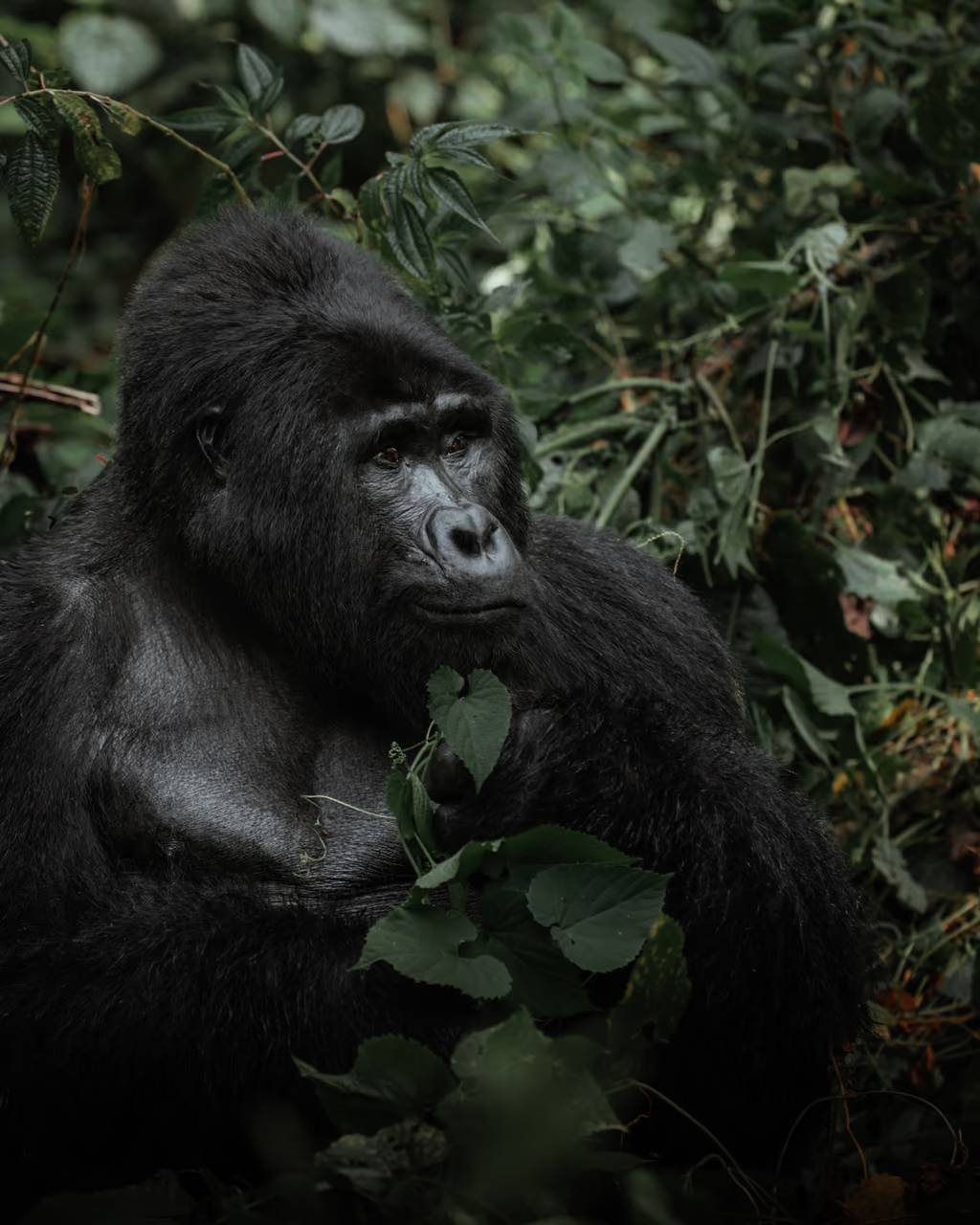
The short answer is this: gorilla trekking in Uganda is real physical activity, but it is often described less honestly than it should be.
It is not a technical mountaineering expedition. It is also not a casual half-hour nature walk in clean, flat conditions. Most travelers do not need elite fitness. What they do need is a realistic view of mud, slope, altitude, uneven footing, and the fact that the walking time is not fixed in advance.
What actually makes it hard
The hardest part of gorilla trekking is not the one hour with the gorillas. It is the approach.
Uganda Wildlife Authority public material for Bwindi says the tracking can take anything from a few hours to most of the day. Mgahinga's brochure describes gorilla tracking there as typically lasting about 3 to 5 hours. In other words, difficulty is shaped less by a fixed "trek length" and more by where the gorilla family is on that day and how the terrain behaves underfoot.
In practice, four things create most of the friction:
- steep and uneven forest ground
- mud and wet vegetation, even outside the wettest months
- altitude and slower breathing on climbs
- route fatigue created by bad trip design before the trek even starts
That last point matters more than many people expect. A traveler who slept in the right base, packed properly, and protected the gorilla day often handles the trek better than a fitter traveler who arrived tired after a long transfer and treated the permit like a generic activity slot.
Who usually manages the trek well
Many first-time visitors can do Uganda gorilla trekking perfectly well if they are honest about pace and preparation.
You do not need to be a runner. You do not need to train like you are doing an alpine summit. But you should be comfortable walking on hills, standing for stretches, and staying calm when the ground gets slippery or the trail slows down.
Travelers usually do fine when they:
- wear broken-in boots with grip
- keep luggage and camera load under control
- avoid squeezing the trek between exhausting transfer days
- ask for support early if knees, balance, or stamina are a concern
Age by itself is not the real filter. UWA rules set the minimum age at 15, but the more useful planning question for adults is whether the route has been designed around their actual pace, not around aspirational talk.
When the trek will feel harder than it needs to
The trek becomes disproportionately hard when the rest of the itinerary is badly built.
Common examples:
- landing late and still trying to push a long transfer
- sleeping too far from the correct trailhead
- carrying more gear than the day actually needs
- wearing new boots for the first time
- assuming "one hour with gorillas" means "one easy morning"
This is why good Uganda planning separates the permit day from everything that can make it brittle. The trek may be the hero moment, but the overnight logic is what decides whether it feels manageable or punishing.
When you should simplify the trip
If your knees are unreliable, your balance is poor on wet ground, or long up-and-down walking already causes problems at home, the professional move is not bravado. It is route simplification.
That can mean:
- choosing a cleaner overnight base
- adding a buffer night instead of rushing in and out
- reducing extra park movement around the trek
- arranging porter support in advance through your lodge or operator
- using a cleaner fly-in structure if the budget allows and road fatigue is the bigger risk
This is not about turning the trip soft. It is about making the gorilla day the main effort, instead of forcing the whole route to become a test of stubbornness.
The honest planning rule
If you want the most accurate answer to "How hard is gorilla trekking in Uganda?", use this one:
For a reasonably mobile traveler with proper footwear and a protected route, it is demanding but very achievable. For a traveler who underestimates the terrain and overloads the itinerary, it can feel much harder than expected.
That is the real distinction. Not athlete versus non-athlete. Clean planning versus sloppy planning.
Bottom line
Uganda gorilla trekking deserves respect, not drama.
Treat it as a serious forest walk with variable duration, a one-hour gorilla encounter, and a route that supports the day properly. Plan it that way and the trek usually feels challenging in a good way; plan it casually and the same trek can feel unnecessarily rough.
Sources
These are the primary links used in the article metadata and should be the first recheck point if your decision depends on a live rule, tariff, or official note.
- Uganda Wildlife Authority: Gorilla tracking
Official public overview of the activity.
- Uganda Wildlife Authority: Guidelines for the management of gorilla and chimpanzee tracking (July 2024)
Official tracking rules, age limit, and structure.
- Uganda Wildlife Authority: Bwindi Impenetrable National Park brochure
Official Bwindi context on timing and trek variability.
- Uganda Wildlife Authority: Mgahinga Gorilla National Park brochure
Official Mgahinga context on typical trekking duration.

Written by
Editorial research team covering Uganda routes, parks, gorilla trekking, chimpanzees, safety, entry requirements, and practical trip planning.
Want to turn this into a workable Uganda route?
Go back into the core editorial guides once the article has clarified the practical question you were trying to solve.
Read gorilla trekking in Uganda