What a Gorilla Trekking Day in Uganda Actually Looks Like
See how a Uganda gorilla trekking day works, from briefing and ranger allocation to the forest walk, one-hour gorilla visit, and slower afternoon.
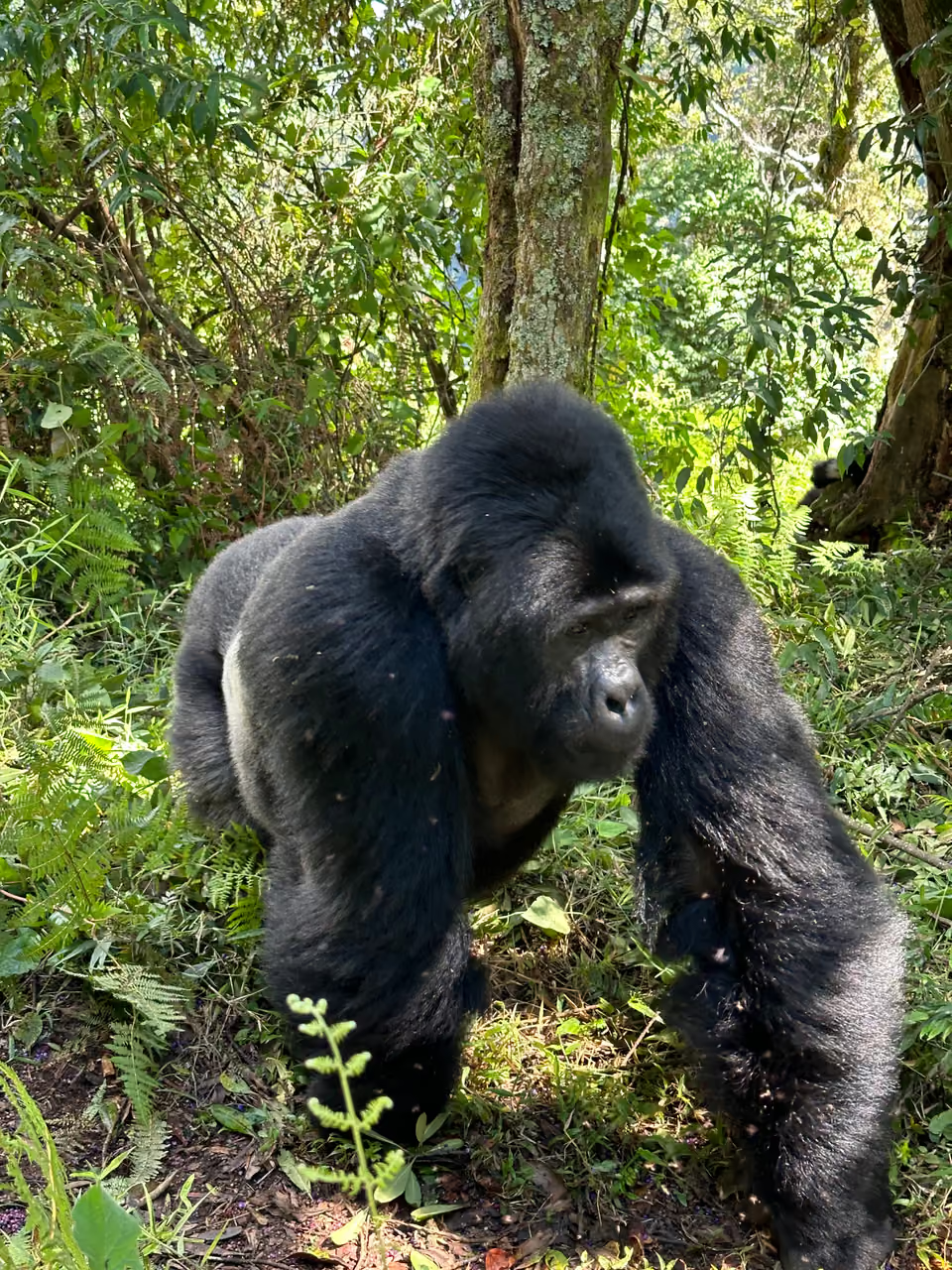
Most first-time travelers imagine gorilla trekking as one dramatic hour in front of the animals. That is the emotional center of the experience, but it is not what the day actually feels like.
Operationally, the whole day matters more: the early start, the briefing, the ranger allocation, the climb or descent through forest, the stop-start pace on muddy ground, and then the very quiet hour once your group reaches the gorillas. If you understand that full sequence, you usually plan the trip better and enjoy the trek more.
Before you reach the trailhead
Uganda gorilla trekking is not a lazy lodge morning. Public UWA material frames the day as an early start, and the Bwindi brochure specifically places registration around 7:30 a.m., briefing around 8:00 a.m., and departure for the forest around 8:30 a.m. Mgahinga public material describes the activity as starting around 8:00 a.m. at Ntebeko.
The practical implication is simple: do not treat the trek day like a flexible sightseeing day.
- Sleep in the correct overnight base the night before.
- Keep breakfast early and simple.
- Have your passport and permit details easy to reach.
- Dress for mud, wet vegetation, and temperature changes rather than for photos.
If your route still depends on a long same-morning transfer, the trip is already too tight.
Briefing and gorilla family allocation
This is the part that many travelers underestimate. The day does not begin with walking. It begins with control.
Rangers brief the group, explain the rules, and allocate visitors to a gorilla family. Official guidance also makes clear that the minimum age is 15, and that the time limit with the gorillas is one hour once contact is made. That one hour is strict. The rest of the day is variable.
This is also the moment when the morning becomes real. You stop thinking in generic phrases like "we are trekking gorillas tomorrow" and start dealing with the actual terrain, the actual ranger team, and the actual group you have been assigned.
In practical terms, this is why travelers should protect the day:
- do not plan a heavy transfer after the trek if it can be avoided
- do not carry more weight than you need
- do not assume your experience will match somebody else's timing exactly
The walk is the unpredictable part
The official Uganda material is honest here. Bwindi tracking can take anything from a few hours to most of the day. Mgahinga's public brochure describes the activity as typically lasting about 3 to 5 hours. That does not mean one park is always easy and the other always hard. It means the walking part is dynamic.
The reason is simple: gorillas do not perform for the schedule. Trackers and rangers work from where the animals were last found and how they moved. Some groups are reached relatively quickly. Others require longer forest movement, more climbing, or slower footing.
This is what the day often feels like in real terms:
- long stretches where you are simply walking and listening
- sudden stops while rangers assess direction
- steep or slick sections that are harder than they look in photos
- a pace that is manageable for many people, but tiring if your footwear, knees, or breathing are already compromised
That is why the best mindset is not "How many minutes until the gorillas?" but "Is the whole day logistically protected?"
The hour with the gorillas is short and clear
Once your group reaches the gorillas, the experience becomes much easier to understand. UWA rules limit the visit to one hour. The hour is not there so you can maximize phone storage. It is there to keep the interaction controlled for both visitors and the gorillas.
This part of the day usually feels very different from the approach:
- quieter
- slower
- emotionally bigger than the clock suggests
- physically easier than the walk that got you there
Many travelers come back saying the hour felt fast, but that the day as a whole felt complete. That is exactly the right expectation.
What the afternoon usually feels like
The most common planning mistake is to assume the day is basically over once you leave the forest. In reality, most people come out hungry, muddy, and more tired than they expected, even when the trek went well.
That is why clean gorilla routes tend to work better than overbuilt ones. The afternoon is usually better used for:
- lunch
- a shower and dry clothes
- a slow lodge evening
- a short local transfer only if the route was designed for it from the start
It is usually the wrong place to force a major road move just because the permit itself lasted only one hour.
Practical mistakes to avoid
The day gets better when you remove the avoidable errors.
- Do not treat the one-hour gorilla visit as the whole activity. The official guidance treats tracking time as the entire experience.
- Do not build the trek onto the back of a sloppy arrival day.
- Do not assume "early finish" is guaranteed.
- Do not pack for a flat walk.
- Do not judge the day only by how long you saw the gorillas. Judge it by whether the route around the permit was built intelligently.
Bottom line
A Uganda gorilla trekking day is best treated as one protected block of time built around the one-hour gorilla visit.
That framing is much more useful than romanticizing the sighting alone. If the overnight base is right, the morning is not rushed, and the rest of the itinerary gives the trek space to breathe, the day usually feels serious, memorable, and well worth the effort. If the route is tight and improvised, even a successful sighting can feel harder than it had to.
Sources
These are the primary links used in the article metadata and should be the first recheck point if your decision depends on a live rule, tariff, or official note.
- Uganda Wildlife Authority: Gorilla tracking
Official public overview of Uganda gorilla tracking.
- Uganda Wildlife Authority: Guidelines for the management of gorilla and chimpanzee tracking (July 2024)
Official tracking rules, age limit, and visit structure.
- Uganda Wildlife Authority: Bwindi Impenetrable National Park brochure
Official Bwindi timing and planning context.
- Uganda Wildlife Authority: Mgahinga Gorilla National Park brochure
Official Mgahinga trek timing and day-flow context.

Written by
Editorial research team covering Uganda routes, parks, gorilla trekking, chimpanzees, safety, entry requirements, and practical trip planning.
Want to turn this into a workable Uganda route?
Go back into the core editorial guides once the article has clarified the practical question you were trying to solve.
Read gorilla trekking in Uganda